
Phase 2 of Newbury's Wharf and Peace Garden works
Creating a space for everyone
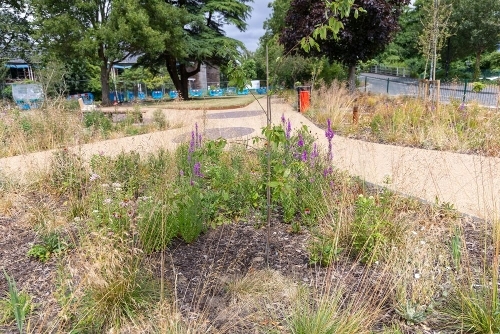
Work to complete the Peace Garden and improve access to Newbury's Wharf is moving into its next phase this month, marking another step in delivering the vision set out in the Newbury Town Centre Masterplan.
Most of the Peace Garden was finished in 2025, but during construction, our teams uncovered structural issues with the south riverbank. To keep the area safe and protect the waterfront for the long term, immediate stabilisation work is now essential. This means riverbank piling will begin this month alongside further improvements between the American Bridge and the A339 flyover, including the careful removal of the historic goods crane, which will return, fully refurbished, in early summer.
These urgent works are crucial to safeguarding the Wharf and will support future enhancements for walking, wheeling and cycling along the waterfront. While this activity is underway, some areas of the Peace Garden will need to be closed temporarily to allow the work to be carried out safely.
At the same time, Phase 2 of the Peace Garden will bring the project to life with new biodiverse planting, upgraded landscaping, integrated seating and stronger visual connections to the water - ensuring this new public space feels calm, welcoming and accessible to everyone.
This work builds on designs by award-winning architectural and landscape consultancy Adams & Sutherland, supported by a dedicated partnership of organisations working to deliver a vibrant, community-focused space at the heart of Newbury. The improvements across both sides of the canal will form part of a wider programme to enhance the town centre, aligned with ambitions in the emerging Local Plan.
"We're really looking forward to opening the Peace Garden in time for Spring next year. This new space will bring real health and wellbeing benefits for our residents and visitors, and it's just the beginning of the transformative changes planned for the Wharf and the wider town centre. Once completed, these improvements will be enjoyed for generations."
These projects are supported by Business Rates Retention Pilot funding and the government's United Kingdom Shared Prosperity Fund.
History of the crane
Newbury's prosperity received a boost in 1725 when work on the Kennet Navigation was completed, making the river navigable between Reading and Newbury.
A basin and wharves were constructed on the east side of the town centre to handle bulky materials and food.
Following redevelopment in the late 20th century, the only remains are Wharf House (formerly Kendrick House), the Stone Building and the Grain Stores, which are now part of the museum. A single crane from the railway goods yard is preserved as a feature on the riverbank.
In the late 18th century, the River Kennet Navigation was opened up, followed by the construction of the Kennet and Avon Canal. Newbury Wharf was developed to capitalise on the opportunities provided by these waterways.
Wharf Street itself existed from an earlier period and contains several post-medieval buildings, including the former house of the master of the Wharf. On its south side is Cloth Hall, the remains of Kendrick's Workhouse of 1625. This is now part of West Berkshire Museum, together with a granary range behind it, which is likely to have been associated with the Wharf.
On the wharf area itself, only the Stone Building, a 19th-century granary, and a crane reflect its former use. Wharf Street is a narrow road which retains its historic character from Market Place to Cloth Hall.


